Museum directors and stakeholders today face a critical business challenge: capturing the attention of a global audience in the experience economy. In a world driven by emotional engagement, a “static archive” is no longer enough to attract the attention of visitors. To remain relevant and profitable, museums must evolve into “dynamic experience centers.”
Whether you are upgrading an existing institution or building a new landmark, the objective is clear: maximize visitor value.
Here is a breakdown of how to achieve this transformation, illustrated by our project at the Tabuk Regional Museum in Saudi Arabia, developed to support the region’s tourism goals.
Step 1: Identify the “gap” that exists between content and today’s expectations
The Business Insight: Most museums rely almost completely on artifacts. However, without context, even the rarest artifact fails to retain visitor attention. In the tourism sector, attention is currency. If you want to compete for international tourists, you need a modern visual language that speaks to them instantly.
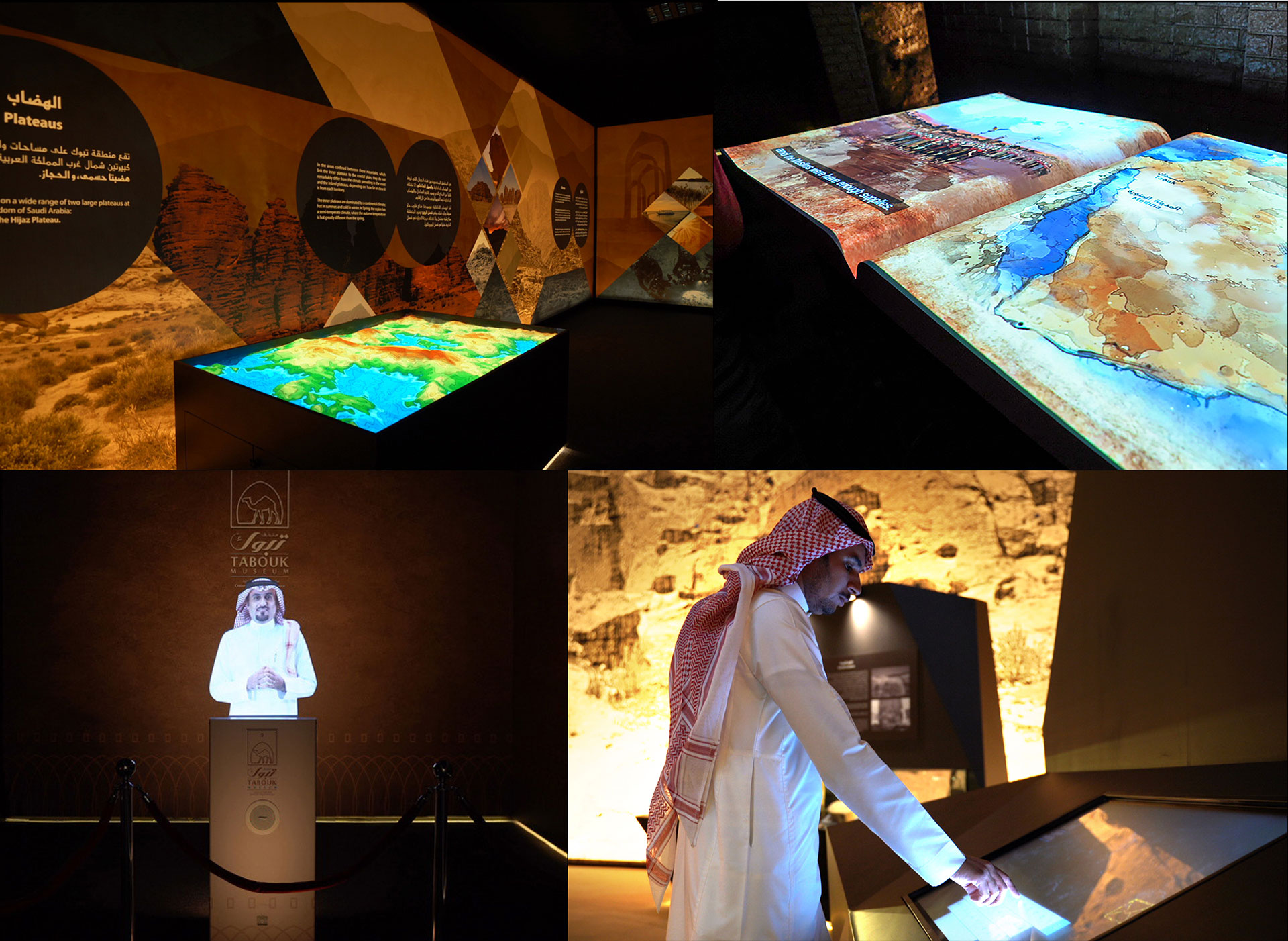
The Real Case (Tabuk): The Tabuk Regional Museum had a solid foundation—a deep historical legacy spanning centuries. However, the physical building (even as a new construction) was just a shell. The stakeholders understood that to attract global travelers, the museum needed more than glass cases. It needed a digital layer to turn passive walking into active engagement.
Step 2: Define the strategic goal
The Business Insight: Don’t just ask “What should we display?” Ask “What is our strategic goal?” Modern museums are drivers of economic growth and tourism. The goal is to create a “must-see” destination that generates word-of-mouth and repeat visits.
The Real Case (Tabuk): This project was not just about history, it was a visual storytelling strategic move aligned with Saudi Arabia’s Vision 2030 for the growth of the tourism sector. The client required a world-class experience center that would position Tabuk as a key cultural destination. The challenge was to create a compelling immersive narratives that would appeal to both local communities and international tourists, making the region’s heritage engaging and accessible to all.
Step 3: Integrate technology without rebuilding
The Business Insight: A popular misconception is that in order to modernize a museum, it must be completely shut down for renovation. This is false. Interactive installations and immersive media can be integrated into existing spaces without rebuilding. Technology should never be a distraction; it should be a seamless layer that enhances your existing architecture.
The Real Case (Tabuk): Lumotion Studio approached the museum spaces as a canvas. We didn’t need to alter the building’s structure; instead, we enhanced it:
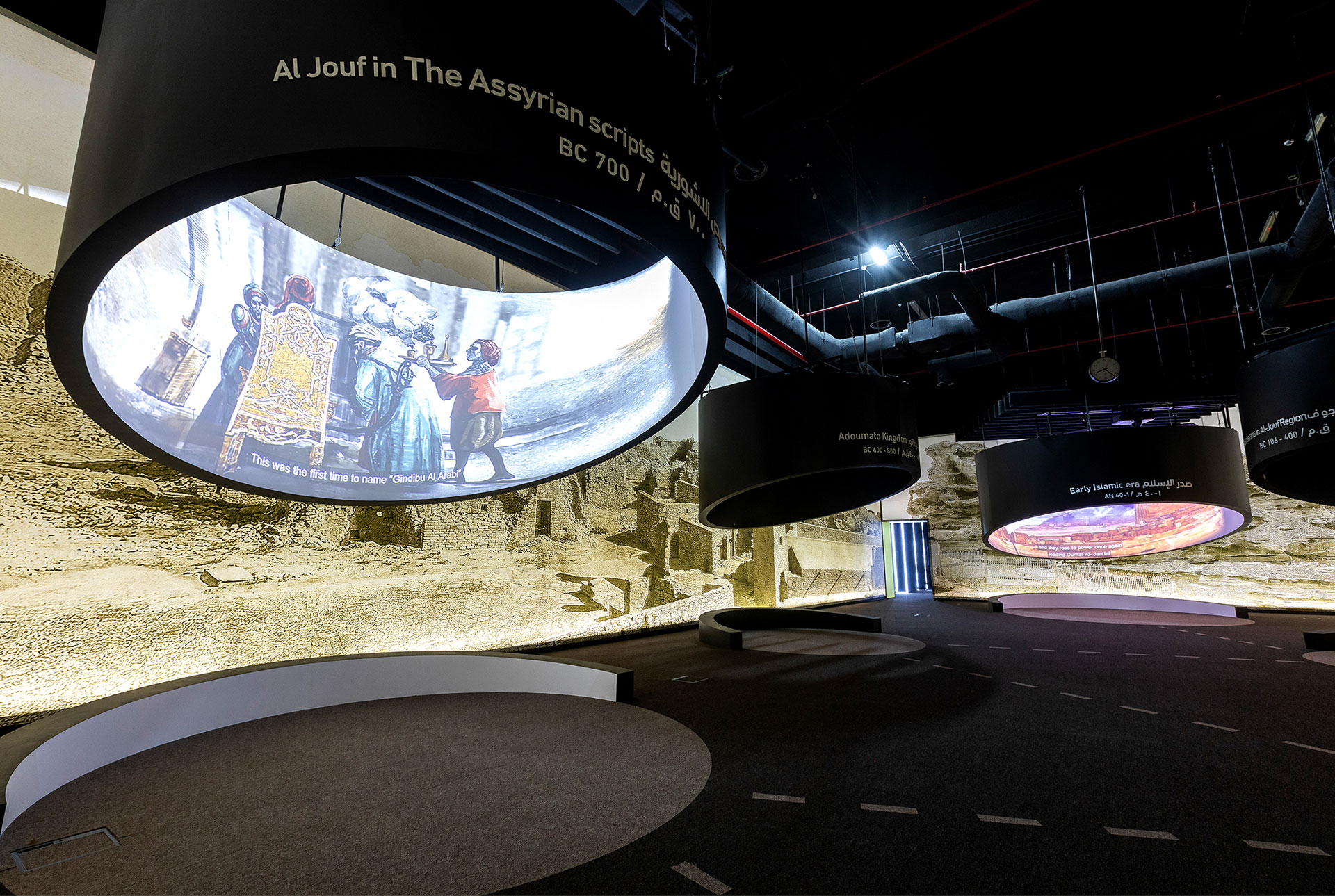
- Immersive projections: We used projection mapping to “paint” history onto the walls, visualizing battles and landscapes.
- Smart modernization: Using only content and lighting, we demonstrated that spaces can be easily modernized.
- Dynamic storytelling: High-quality 2D and 3D animations replaced the usual static text, providing a quick and visual way to understand a complex story. This is ideal for the modern tourist.
Step 4: Measure the Return on Engagement
The Business Insight: Successful transformation delivers measurable ROI. In today’s experience centers, “time spent” (time spent in the museum) is increasing, which correlates with higher visitor satisfaction and reputation.
The Real Case (Tabuk): The result was a state-of-the-art cultural heritage center that set an example of active participation from the moment of entry. By introducing digital technologies into the museum, we achieved the following:
- Global Appeal: Visual language overcomes language barriers, attracting international tourists thanks to interactive elements.
- Increased Dwell Time: hanks to the captivating sensory immersion of the exhibits, visitors stop, look, and listen, rather than passing by.
- A Modern Landmark: The museum has successfully positioned itself as a technology leader, directly supporting the region’s tourism development goals.
Why Invest in Interactive Installations?
Upgrading your museum with Lumotion Studio isn’t just a design choice; it’s a strategic investment. Here is what you gain:
- Boost in Tourism: Create a “wow” factor that attracts visitors and fits national tourism strategies (like Vision 2030).
- Cost-Effective Modernization: You don’t need to rebuild your museum. We can integrate interactive zones into your current halls.
- Higher Engagement: Turn passive observers into active participants with psychological presence so that your message is heard and remembered.
Ready to transform your museum into a modern tourist attraction? Lumotion Studio specializes in crafting immersive environments that boost foot traffic and engage visitors. Let’s chat about how to bring your idea to life.