What is immersive cinema?
Immersive cinema is less a single format than a stack of techniques intended to increase presence. The sensation is that you are inside an environment rather than watching it from a safe observational distance.
It is fair to say that the giant IMAX frame fills peripheral vision. A full dome projection environment – where there is barely a visible edge to the image. Spatial audio systems like Dolby Atmos that move sound objects above and around the audience instead of assigning sound to fixed channels. Motion seating synchronized through timecode systems. VR headsets. Interactive installations where viewers trigger visual responses through movement.
Some formats are subtle. Some are almost cartoonishly physical.
For selling tickets faster theaters blur distinction constantly between immersion and spectacle. A louder explosion is not an automatically immersive, vibrating chair is not either. Unsynchronized motion seats are one of the fastest ways to destroy immersion because the body notices these timing errors instantly. You stop feeling yourself inside the scene and now feeling strapped to machinery.
A good immersive design tunes you to an emotional rhythm rather than competing with it. Film “Dune” in IMAX cinema feels immersive partly because of scale and sound pressure, but also because Denis Villeneuve leaves room for atmosphere. A 4DX screening that can throw wind, mist, scent, seat jolts at the audience every ninety seconds can become weirdly exhausting.
Exists five layers of immersion operating in most current systems:
| Layer | What it does |
|---|---|
| Visual immersion | Curved screens, LED domes, panoramic projection, expanded aspect ratios |
| Audio immersion | Spatial audio, object-based sound, binaural systems |
| Physical immersion | Motion seats, vibration, wind, temperature shifts |
| Olfactory immersion | Timed scent release systems |
| Interactive immersion | Viewer choices, sensors, real-time rendering |
Architectural immersion, which is pretty harder to categorize because it treats the room itself as part of the narrative medium. Projection-mapped museums do this also. Many immersive exhibitions barely resemble cinemas anymore. They all behave more like they are explorable environments.
This shift matters because theaters no longer compete only with other theaters. They are competing with gaming, streaming, social media, VR platforms, concerts, esports, museums, even themed retail spaces. Watching a film at home is convenient. Leaving home has to feel justified now.
How immersive cinema works
Behind marketing videos and the bright neon lighting of cinema lobbies, immersive cinema conceals a fundamental synchronization problem.
Image, sound field, physical effects, lighting cues, and, of course, audience interaction systems – all must be almost surgically precise in timing. The slightest discrepancy immediately disrupts presence. People may tolerate visual impairments, but they are extremely good at detecting time discrepancies between their senses.
A typical immersive installation involves several overlapping systems operating simultaneously.
| System layer | Function |
|---|---|
| Content design | Narrative structure, sensory cues, pacing |
| Projection system | Laser projection, LED walls, domes, mapped surfaces |
| Audio system | Spatial speaker arrays, Atmos, binaural processing |
| Physical effects | Motion, haptics, mist, scent, airflow |
| Interaction layer | Sensors, motion tracking, branching choices |
| Control system | Timecode synchronization, cue triggering, calibration |
The projection is the most noticeable part. Curved screens expand peripheral vision, thereby reducing the perception of physical boundaries. Dome structures further enhance this effect, enveloping viewers both vertically and horizontally. In projection systems, walls, floors, ceilings, and columns – everything becomes a potential surface for projecting.
However, LED systems further complicate matters. They eliminate projection limitations such as brightness loss and shadow artifacts, but they also alter the texture of the image itself. Some domed LED spaces look stunning. Others resemble giant conference center displays with cinematic ambitions.
Sometimes sound can be more important than imagery. People underestimate how much spatial sound affects immersion. Dolby Atmos and related object-based systems allow sound designers to dynamically position sound throughout a room, rather than tying effects to predetermined speaker channels. When done correctly, this can subtly alter the viewer’s spatial perception.
When done incorrectly, the sound can sound like a helicopter circling over a mall food court.
The physical layer is where immersive cinema becomes a point of contention. The physical sensations of film events are transformed by moving seating systems like D-BOX and 4DX, using vibration, tilt, simulated impacts, airflow, scent, water, and even foot tickling in some installations. Upon first encounter, many people either smile like children or immediately feel disgust. Both reactions are entirely understandable.
Some genres can benefit greatly from this: action films, racing movies, sci-fi thrillers, and some horror elements. Films like dramas typically don’t need this. No one needs a chair vibrating in sync during a breakup scene.
There’s also a production aspect to consider. Traditional cinematic style doesn’t work automatically in immersive environments. In dome or 360 cinema systems, the rhythm of editing changes: quick cuts can be disorienting, and legibility of text on curved surfaces becomes difficult. Directors have to think differently about how to capture viewers’ attention, as they might even be looking in the wrong direction.
In VR cinema, in particular, filmmakers lose some control over framing.
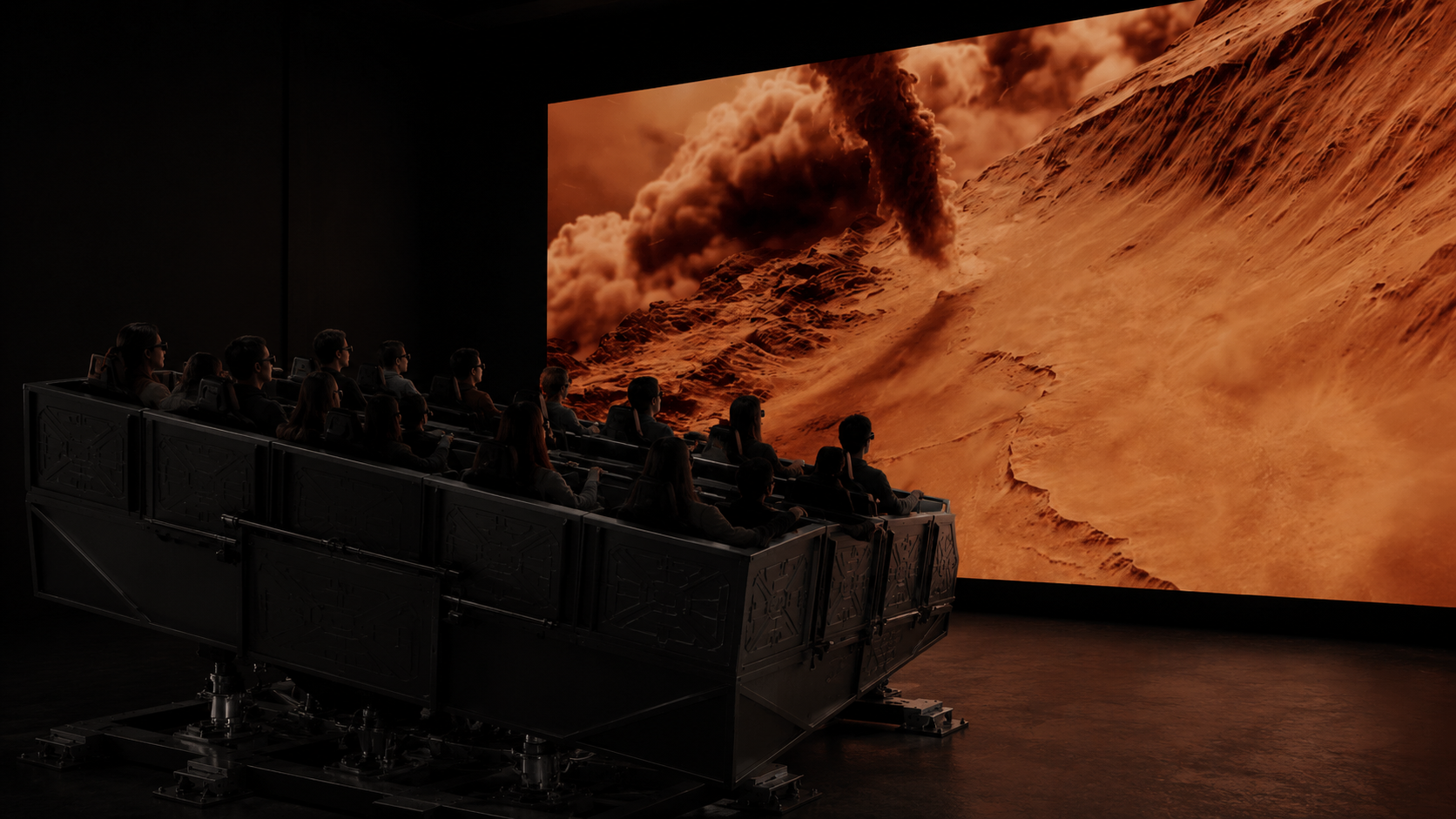
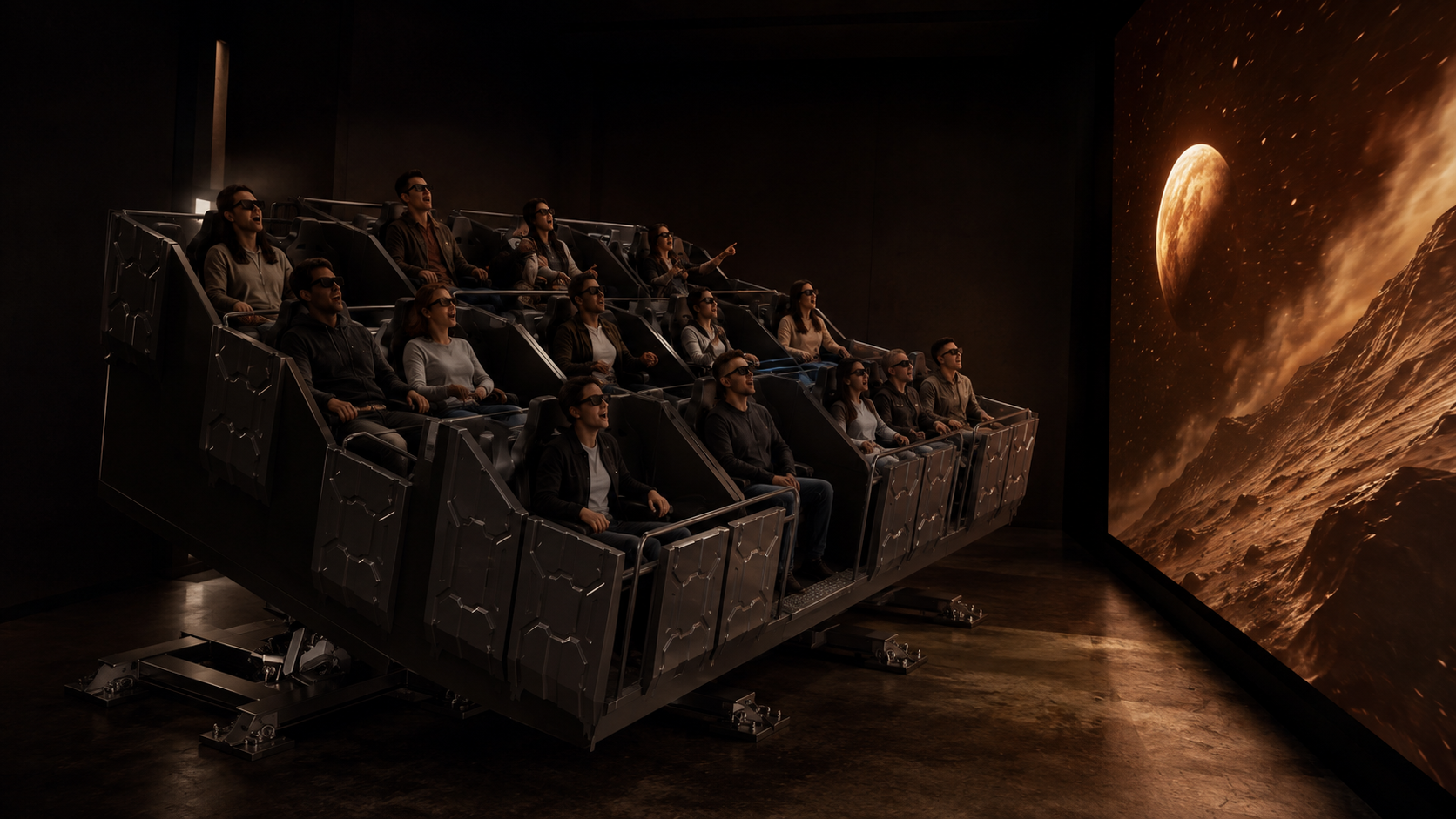
Traditional cinema vs. Immersive cinema
In traditional cinema the audience faces a screen and narrative information is framed and controlled tightly by editing, composition, and sound design. Viewers remain observers.
Immersive cinema stretches that arrangement.
| Aspect | Traditional cinema | Immersive cinema |
|---|---|---|
| Viewer role | Observer | Participant or embodied viewer |
| Screen | Fixed frontal frame | Curved, panoramic, dome, headset |
| Sound | Surround/stereo | Spatial/object-based |
| Physicality | Mostly static | Motion, haptics, environmental effects |
| Story structure | Linear | Linear, branching, or reactive |
| Risk | Emotional distance | Sensory overload or gimmick fatigue |
IMAX is a premium large format, as is Dolby Cinema. They improve brightness, contrast, scale, and sound fidelity. But they certainly don’t change the viewer’s subjectivity or their physical interaction with what’s happening around them. A huge screen alone doesn’t create a captivating narrative. It creates an enhanced presentation. Meanwhile, interactive cinema introduces real participation.
From screen to space: The evolution of immersive cinema
Silent films used live musicians and theatrical accompaniment to heighten the emotional connection with the audience. Then came synchronized sound. Then Technicolor. Then widescreen systems expanded peripheral vision and began to compete with television. Cinerama in the 1950s was particularly ambitious – three synchronized projectors created a massive, curved image. There was also “Smell-O-Vision,” which remains one of the funniest cul-de-sacs in film history. Technically fascinating, yet practically terrifying. Scents appeared late, blended unpredictably, and lingered between scenes. Audiences reportedly smelled romance during unrelated scenes because the ventilation systems couldn’t clear the odors quickly enough. IMAX more successfully refined widescreen immersion, emphasizing image clarity and scale over excessive sensory layering. Later, digital projection and computer graphics expanded what filmmakers could convincingly depict. Suddenly, entire environments could be created without physical constraints.
VR arcades, virtual reality headsets, projection-based exhibitions, dome simulations, 4DX cinemas, ScreenX panoramic systems, and LED volumes – all of these formats emerged from industries that overlap with immersive and dome cinemas, rather than from a pure cinematic tradition. Theme parks have also influenced cinemas. Games have influenced museums. Architectural media have influenced concerts. Streaming has increased the pressure. After the pandemic, audiences have become more selective about their cinemagoing. If people leave home, they increasingly want an eventful viewing experience. Cinemas have noticed that audiences might skip a mid-budget drama at a multiplex, but will pay more for a gripping sci-fi film in a premium format with giant screens and spatial sound.
What immersive cinema looks like today
The market is fragmented now and different experiences can be described with the word “Immersive”, depending on venue type.
Premium large-format theaters
IMAX – is the most recognizable example. Large screens, expanded aspect ratios, calibrated projection, massive sound pressure. Dolby Cinema focuses more on contrast, HDR imagery and Atmos sound integration.
Formats like Cinemark XD or ImmersiveX: brighter projection, luxury seating, enhanced sound systems, better presentation quality.
In these cases, premium experiences first, immersive experiences second.
Motion and multisensory formats
4DX leans more about physical effects: seats move dynamically, wind blasts during action scenes, mist, vibration, scent diffusion, flashes of light. D-BOX is generally subtler: more haptic translation, less theme-park chaos.
Panoramic and peripheral formats
ScreenX expands imagery onto side walls, creating a 270° environment. ICE theaters use illuminated side panels and peripheral visuals similarly. These formats exploit peripheral vision more than physical sensation. They work best with films designed consciously for expanded framing. Otherwise the side imagery can feel decorative rather than meaningful.
Dome and shared-reality venues
LED domes, full-dome projection environments, sphere-style architectures, shared-reality venues like Cosm – these spaces blur boundaries between cinema, simulation, live performance, and collective VR. Sports broadcasts, concerts, documentaries, interactive media, and cinematic experiences coexist inside the same infrastructure.
Some cinema dome environments produce astonishing spatial presence. Others reveal a practical limitation: gigantic immersive spaces require gigantic content budgets. Filling 360° environments convincingly is expensive.
VR and interactive cinema
VR cinema is technically impressive and remains positioned, commercially inconsistent.
Head-mounted displays create strong personal immersion, but they isolate viewers socially. Traditional cinema works partly because audiences experience stories together. Laughter spreads. Tension spreads. Silence spreads. VR often sacrifices that collective dynamic for deeper individual presence.
The future of immersive cinema
Cinema is entering a new era where audiences can not only watch a story but also participate in it. Technological evaluates in extended reality (XR), 360-degree displays, spatial sound, volumetric filming and virtual production are changing everything: from the approach to filmmaking to the way audiences experience it. One sign of this is the rise of premium and immersive cinemas. Dolby is expanding its use of Dolby Vision and Dolby Atmos in cinemas, combining enhanced image quality with spatial sound. Even more experimental is the Sphere in Las Vegas where massive LED displays, directional sound, haptic seats, wind, fog and other physical effects can transform a film into a multisensory experience for visitors. Traditional cinemas won`t disappear. Instead they will include multiple forms of cinema: from conventional screens to XR and purpose-built immersive venues. The Venice Immersive 2026 program, featuring 68 projects from 26 countries, demonstrates that immersive storytelling is beginning to emerge as a serious creative field. Ultimately, cinema of the future may be less about observing the world through a frame and more about immersing oneself in it.
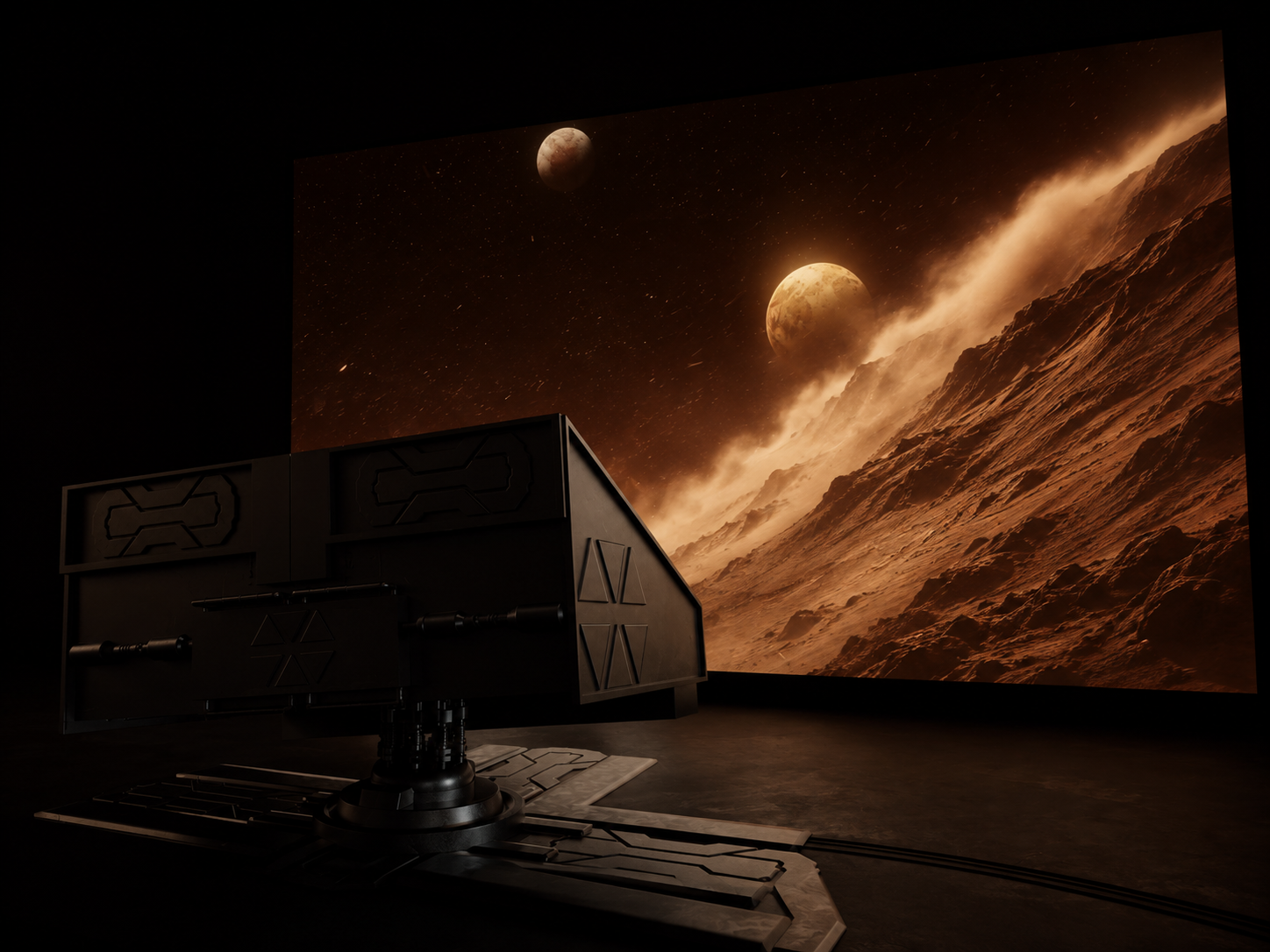
How Lumotion Studio fits in this ecosystem creating immersive experience content
As cinema expands beyond the traditional screen, Lumotion Studios operates at the intersection of worlds, creating an immersive cinema content for this ecosystem where storytelling, physical space, technology, and audience participation converge. Rather than viewing immersive cinema as simply a big screen or a VR experience, Lumotion approaches it as a spatial narrative. Our studio combines cinematic content with projection mapping, immersive cinema sound system, motion tracking, interactive installations, 3D environments, and sensory technologies – all to transform ordinary spaces into experiences that viewers can get immersive cinema experiences. This approach is particularly effective for museums and cultural centers. Physical artifacts provide authenticity, interactive installations invite visitor participation, and immersive cinema experience can provide the emotional layer that ties everything together into a cohesive story. Lumotion has already applied this philosophy to international projects, including interactive museums in Saudi Arabia and entertainment projects in Dubai and Europe. Our multidisciplinary team brings together artists, producers, programmers, and engineers, allowing the studio to connect creative storytelling with tangible technical implementation in pursuit to make cinema 4d content for 360 degree cinemas and immersive cinema auditoriums.
As immersive cinema evolves, the role of our studio is becoming clear: bridging the gap between watching a story and experiencing it. For museums, attractions, entertainment venues, and brands seeking to create experiences for a new generation of audiences. Lumotion Studio transforms spaces into stories and visitors into participants.