Everyone remembers the museums of past generations, where visitors had to whisper in quiet halls and view exhibits behind glass. The concept of a museum has completely changed today, thanks to rapid technological advancements. This change has taken the form of the interactive museum – a dynamic, living space where visitors don’t just observe history, but immerse themselves in it.
It combines visual storytelling, multimedia performances, and interactive technologies. As a result, these spaces are transformed from traditional cultural archives into exciting places to visit. A crucial question often arises: how do you actually create an interactive art experience that will captivate families, students, and travelers from around the world?
So, to understand this in more detail, let’s look at the example of one of our flagship projects – the Tabuk Digital Museum, which covers an area of 1,200 m².
The Challenge: What Was Needed
We were set an interesting challenge: to bring the history of the Tabuk region to life. We succeeded in achieving this goal thanks to our collaboration with the investment company ‘Samaya’, on behalf of the Saudi Arabian Ministry of Tourism and National Heritage.
We knew this project required more than just ‘screens’, so our goal was to create a continuous interactive art experience. Its realisation was necessary to achieve the following objectives:
- To stimulate cultural tourism and strengthen the city’s image.
- To engage audiences across generations.
- To ensure seamless operation for many years through the use of reliable and high-performance technologies.
- To transform complex historical data into an emotional and captivating journey through the immersive museum.
Our Solution: Engineering the Immersive Experience.
We developed a series of interactive exhibits tailored to the client’s specific needs. To achieve this, we didn’t just install equipment; we created an interactive wall featuring stories and tactile elements that encourage active participation.
We developed a series of interactive exhibits specifically tailored to the client’s needs. To achieve this, we didn’t just install equipment; we created interactive installations featuring narratives and tactile elements that encourage active participation.
The result exceeded our expectations because everything turned out simply incredible. The installations brought the story to life in an immersive environment.
The Interactive Book: Reimagining Literacy
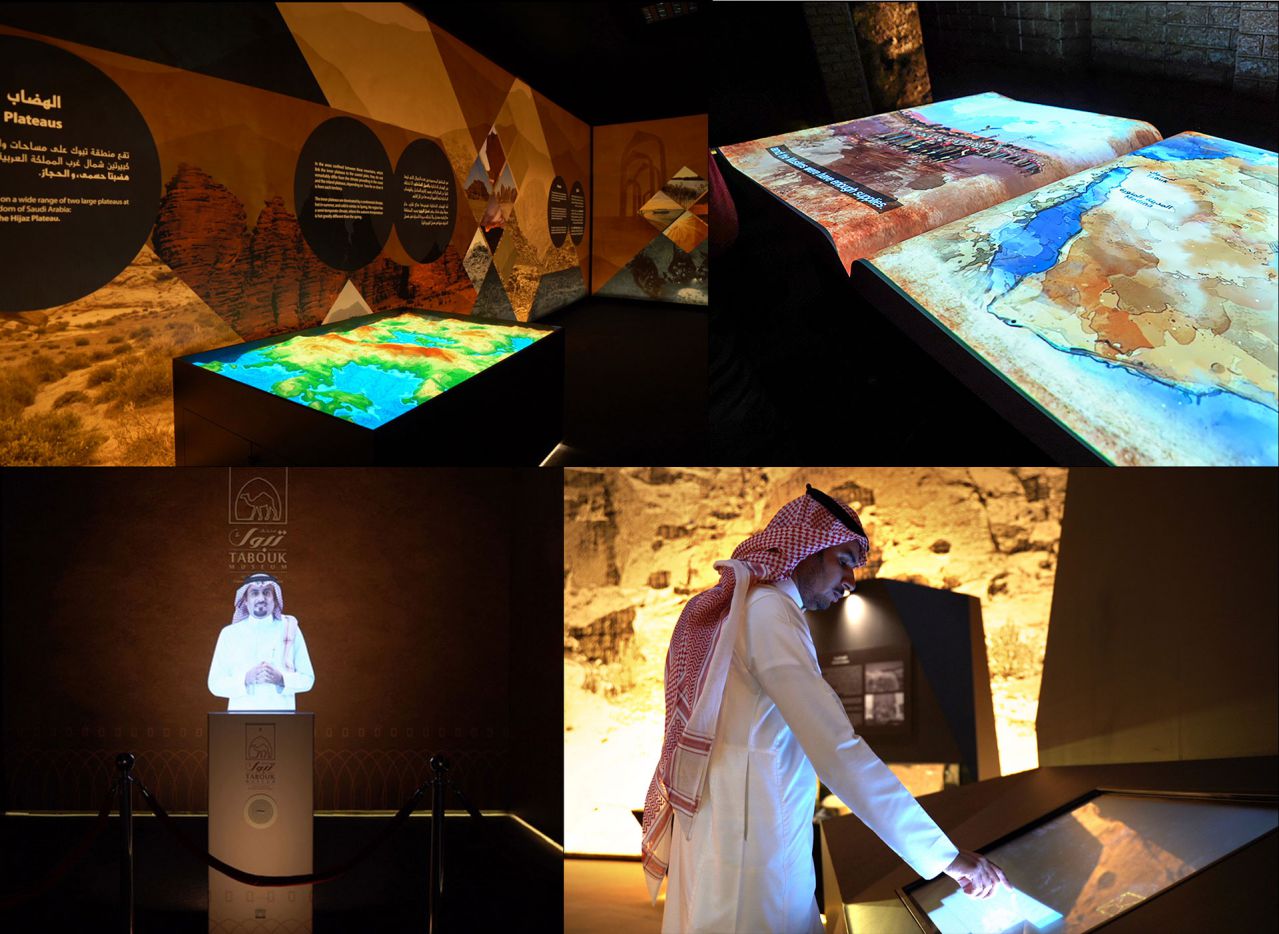
In this project, we have transformed traditional reading into an interactive narrative. It operates using gestures and projection-based storytelling experience. Gesture recognition technology allows visitors to turn virtual pages with a simple hand movement. Each page is accompanied by multimedia visuals and animations that play in real time. This installation allows visitors to experience stories about cultural heritage as if they were watching a movie.
Multimedia Interactive Touch Wall: History at Your Fingertips
To encourage social interaction, we’ve created an interactive table with multi-touch support. What makes it ideal for groups of students and families? It works like this: groups can simultaneously view 3D models and materials from cultural archives. This playful approach turns a museum visit into a shared discovery.
The Interactive Sandbox: Sensory & Topographic Play
It’s safe to say that the “Interactive Sandbox” is one of our most popular installations. It combines ordinary sand with interactive projection mapping. As visitors move the sand, a depth sensor calculates the terrain’s topography. This allows us to display topographic colors, rivers, and mountains in real time. It is the best example of an immersive play that intuitively helps explore geography and ecosystems.
Seamless Navigation: The Referral Stand
A key consideration is the creation of Interactive Referral Stands to ensure a smooth flow of visitors. Multilingual digital guides help visitors navigate the museum immersive art zones. They also provide recommendations and ensure that no one misses a single detail of the experience.
The Outcome: A Landmark of Cultural Innovation
The Interactive Museum of Tabuk has been in operation for over two years. This proves that a high-tech interactive art museum can be both cutting-edge and exceptionally sustainable. By combining interactive 3D mapping and haptic technologies, we helped the Ministry of Tourism transform a traditional archive into a world-class tourist attraction.
In addition to the initial “wow” factor, the project delivered a number of key strategic benefits:
Proven durability and reliability: unlike many temporary digital displays, our installations have been operating without interruption for over 700 days. The immersive experience studio is capable of transforming striking visual elements for events into permanent, reliable systems that can withstand intensive daily use. We’ve proven this through our own experience.
Improving the city’s image and promoting tourism: Enhancing the city’s image and promoting tourism: The museum has become the region’s premier cultural tourism destination. It is a must-see attraction. As a result, the project has significantly increased the length of visitors’ stays and contributed to the growth of the local economy.
Appeal across generations: A key advantage is the high level of engagement among visitors of all ages. Children are captivated by the immersive play experience in the “Interactive Sandbox,” while researchers and older visitors spend hours exploring the deep historical layers on the “Interactive Table” and the “Interactive Wall.”
Learning effectiveness through gamification: The shift from passive reading to interactive storytelling has paid off, as the retention of historical information has increased dramatically. Visitors don’t just learn about Tabuk’s history—they actively participate in it, resulting in a much deeper educational impact.
Scalable Cultural Preservation: This project serves as a successful blueprint for how heritage sites can modernize. We’ve shown that digital archives aren’t just “screens”—they are emotional bridges that connect the youth to their ancestors through a 3D mapping experience.
Looking to Transform Your Space?
Whether you want to modernize a cultural heritage site, create a digital exhibition from scratch, or integrate projection mapping art into a permanent installation, we know how to make it happen. Your project will become more than just an “exhibition” – it will be a world-class, captivating immersive destination, because our team combines creative vision with engineering precision